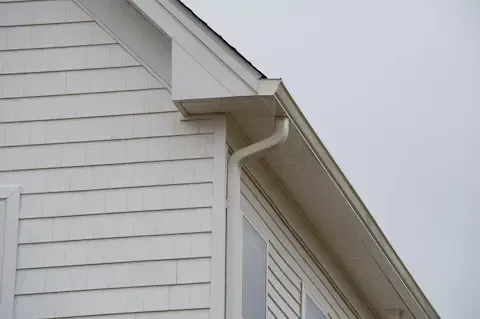
Seamless Gutter Installation for Jonesboro AR Homes
When rain moves across Northeast Arkansas, it moves fast. Jonesboro homes can take on several inches of rainfall in a single storm, and aging sectional gutters with their joints and seams are often the first point of failure. Water backs up, spills over fascia boards, and pools along the foundation. Seamless gutters solve this by eliminating the most common leak points entirely. Understanding how they differ from traditional gutters—and why that difference matters for local rooflines—helps you make a smarter decision before the next storm season arrives.
What Makes Seamless Gutters Different
Traditional sectional gutters are assembled from pre-cut lengths joined together with connectors and sealant. Every connection point is a potential failure. Over time, temperature swings and seasonal movement break down the sealant, and you end up with drips, separations, and staining along the fascia.
Seamless gutters are formed from a single continuous piece of aluminum, cut to the exact length of each run on your roofline. A specialty machine called a gutter roll-former sits in the truck at your driveway and extrudes the gutter to the precise measurement needed. The only joints that exist are at the corners and downspout outlets. Everything else is one uninterrupted channel.
For Gutter Installation in Jonesboro, seamless aluminum is the material of choice for most residential projects because it balances durability, cost, and availability of skilled labor. Steel and copper options exist, but aluminum handles Arkansas humidity well without rusting, and it holds paint or factory finishes without significant fading for well over a decade.
Why Jonesboro Rooflines Benefit from the Seamless Method
Jonesboro sits in Craighead County in a region that sees warm, humid summers and unpredictable spring storm systems moving up from the Gulf. Annual rainfall averages around 51 inches, which is notably higher than the national average. That volume of water demands gutters that can channel it efficiently without springing leaks mid-season.
Local rooflines also vary considerably. Many homes in established Jonesboro neighborhoods like Foxborough, Lake Ridge, and areas near Arkansas State University were built across several different decades and feature a range of pitches and profiles. A seamless gutter formed on-site can be sized to match the actual drainage load of each roof section—not a standard length that happens to be close enough.
A steeper pitch sends water to the gutter faster and in larger volume. If your gutters are undersized or poorly fitted, they overflow at the midpoint of a heavy rain rather than channeling water to the downspouts. Custom-measured seamless systems account for pitch and total square footage of the roof surface during the sizing process.
The Installation Process Step by Step
Understanding what happens on installation day helps you evaluate the work being done and ask the right questions. The process generally follows this sequence:
- Measurement and layout: The installer measures every run of the roofline, records angles at corners, and determines downspout placement for optimal drainage flow.
- Material fabrication: The roll-former extrudes aluminum coil stock into finished gutter profile on-site. The material is cut to exact lengths, with no waste from standard sections.
- Hanger installation: Hidden hanger brackets are spaced along the fascia, typically every 24 to 36 inches. Closer spacing is used near downspout locations and at corners where stress concentrates.
- Gutter mounting: Each run is lifted into the hangers and fastened. Slope is set during this phase—gutters should pitch slightly toward downspouts, usually around a quarter inch of drop per ten feet of run.
- Corner and outlet assembly: Mitered corners are sealed and fitted. Downspout outlets are cut into the gutter and secured. These are the only sealant points in a seamless installation.
- Downspout attachment: Downspouts are connected, secured to the wall with straps, and directed to discharge at least three to four feet from the foundation.
A properly installed seamless system should not flex noticeably under a full load of water, should not show daylight between the back of the gutter and the fascia, and should drain completely without standing water after a rain stops.
Common Mistakes in Gutter Installation
Even with seamless material, a poor installation undermines the system. A few errors appear more frequently than others in residential gutter work:
Incorrect slope: Gutters installed level or sloping away from downspouts leave standing water that accelerates corrosion and creates a breeding environment for mosquitoes—something Jonesboro homeowners deal with enough as it is during summer months.
Inadequate hanger spacing: Hangers placed too far apart allow the gutter to sag under the weight of water and debris. Sagging creates low spots that hold water and stress the corners.
Downspouts too close to foundation plantings: Discharge that empties directly into a mulched bed against the house can drive moisture toward the foundation. Extensions and splash blocks redirect flow appropriately.
Skipping drip edge coordination: Gutters should be positioned so that water coming off the roof drip edge falls cleanly into the gutter channel, not behind it. If the roof was recently replaced or re-shingled, verifying drip edge alignment before new gutters are hung prevents problems from day one.
Gutter Guards and Maintenance Considerations
Jonesboro has significant tree canopy in many residential areas, and oak and sweet gum trees drop debris that clogs gutters quickly in fall. Seamless gutters reduce leak points but do not eliminate the need to keep channels clear. Debris that sits in a gutter traps moisture, accelerates corrosion at the gutter floor, and adds weight that stresses hangers.
Gutter guards are a practical add-on in heavily treed yards. Micro-mesh styles keep fine debris out while allowing water through. They are not maintenance-free—they still require occasional inspection—but they significantly reduce cleaning frequency. Read our gutter installation walkthrough for more detail on guard compatibility and what to expect during a full installation visit.
Without guards, plan for two cleanings per year at minimum: once after spring pollen and seed pod season, and once after fall leaf drop. Inspect downspout outlets at ground level to confirm water is moving freely and discharging away from the home.
Choosing the Right Profile and Color
Residential seamless gutters in Arkansas are most commonly installed in a K-style profile, which has a flat back and a decorative front that resembles crown molding when viewed from the street. Standard residential sizing is five inches for most single-story applications and six inches for larger homes or steeper rooflines with high water volume.
Aluminum gutters come pre-painted in a range of factory finishes designed to match common exterior trim colors. Selecting a color that complements your fascia and soffit boards improves curb appeal and makes any future staining or damage easier to spot against the background finish.
Taking the time to get the sizing, slope, and installation details right from the start means your gutters function properly through decades of Northeast Arkansas weather without repeated repairs.
