Post Storm Roof Inspections for Jonesboro AR Homeowners
Storm season in Northeast Arkansas doesn't give homeowners much warning. A line of severe thunderstorms can move through the Jonesboro area in under an hour, dropping hail, driving rain sideways, and snapping tree limbs before most people have finished checking the weather app. When the skies clear, the impulse is to look around outside, see nothing obviously wrong, and assume the roof held up fine. That assumption costs homeowners money every year — not because the roof failed, but because the damage went undocumented until after the insurance claim window closed.
Why Post-Storm Inspections Are Time-Sensitive
Insurance adjusters and roofing contractors both know that storm damage evidence degrades quickly. Soft metal components like ridge cap flashing and step flashing show hail strikes as distinct dimples immediately after a storm, but oxidation and weather exposure begin softening those impressions within weeks. Granule loss on asphalt shingles is most accurately measured soon after impact, before foot traffic, rain runoff, and UV exposure scatter the evidence further.
Northeast Arkansas sees a concentrated severe weather window roughly from late February through June, with secondary activity in November. When a significant storm system moves through Craighead County, it often affects dozens or hundreds of homes within the same zip codes. Insurance companies are aware of these concentrated events and flag claims submitted long after the storm date for additional scrutiny. Filing promptly with accurate documentation puts your claim in a stronger position from the start.
What a Post-Storm Roof Inspection Actually Covers
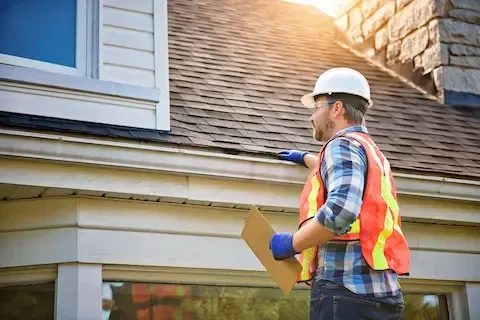
A legitimate post-storm inspection is not a quick visual pass from the driveway. A trained inspector works methodically across every roof surface and component, looking for impact patterns, moisture intrusion points, and structural concerns. Here is what a thorough inspection should include:
- Shingle field assessment — checking for bruising, fractures, missing tabs, and granule displacement consistent with hail size and direction
- Ridge and hip caps — these elevated surfaces take direct hits and are often the clearest indicators of hail caliber
- Flashing inspection — around chimneys, skylights, pipe boots, and wall junctions where storm force can lift or separate seals
- Gutters and downspouts — hail dents on soft aluminum gutters provide measurable evidence of impact energy and stone diameter
- Fascia and soffit — often overlooked but frequently damaged by wind-driven debris and large hail
- Attic moisture check — looking for daylight penetration, wet insulation, or water staining that indicates active leaks
Experienced inspectors also note storm path indicators — the side of the roof facing the predominant wind direction during the event will typically show more concentrated damage. This information matters when an adjuster challenges whether the damage is storm-related or the result of general wear.
Documenting Damage for an Insurance Claim
Documentation is where many homeowners lose ground in the claims process. Photographs taken from the ground rarely capture the detail adjusters need to approve a claim. A professional post-storm inspection should produce a written report with date-stamped photographs of each damaged component, measurements where applicable, and a clear narrative connecting the observed damage to the storm event.
Before your inspection, pull the storm data. The National Weather Service issues public records for hail size, wind speed, and storm track for verified events in Jonesboro and surrounding areas including Brookland, Caraway, and Bono. Your inspector should reference this data in the report. When an adjuster sees hail of 1.5 inches recorded by NWS on the same date your inspection documents corresponding impact patterns across your roof, the claim is materially harder to dispute.
Keep a copy of any storm alerts, radar screenshots, or local news coverage from the event. These supplement the inspection report and build a timeline that works in your favor. For a deeper look at how professional inspectors approach your roof systematically, read our roof inspection walkthrough for a step-by-step breakdown of the process.
Common Mistakes Jonesboro Homeowners Make After a Storm
Several patterns show up repeatedly in the weeks after a major storm system moves through the NEA region. Knowing them in advance helps you avoid the same outcome.
Waiting too long to schedule an inspection. The post-storm window in Jonesboro tends to be busy. Roofing contractors book up quickly after major events that affect Craighead and surrounding counties. Homeowners who wait two or three weeks often find inspectors backed up and claim deadlines approaching. Scheduling within 48 to 72 hours of the storm whenever safe to do so is the right move.
Relying only on the insurance adjuster's inspection. Adjusters work for the insurance company. That does not make them dishonest, but it does mean their assessment reflects their employer's interests. Having an independent inspection completed before or alongside the adjuster's visit gives you a comparison point and professional documentation to reference if you dispute the initial determination.
Assuming no visible damage means no claim. Hail damage to asphalt shingles is not always visible from street level or even from a casual rooftop walk. The granule layer that protects the asphalt mat from UV degradation can be compromised by hail strikes that leave no obvious surface crack. Over the following months, those spots age faster than the surrounding shingle, shortening overall roof lifespan. A trained inspector can identify this type of damage with a systematic evaluation that an untrained eye would miss.
Accepting verbal assessments without written documentation. Any estimate or inspection finding that cannot be put in writing and handed to your insurance company in a formal report is of limited use in a claim. Insist on documentation before the inspector leaves your property.
Choosing the Right Inspector After a Storm Event
Storm chasers are a real phenomenon in Arkansas. After major hail or wind events, out-of-state roofing contractors flood affected markets with door-to-door solicitation, promises of free inspections, and high-pressure tactics to sign contracts on the spot. Some are legitimate. Many are not. Homeowners in Jonesboro who have been through this before understand the value of working with a local contractor who is already established in the community, holds an Arkansas contractor's license, and can be reached after the job is done.
Ask for proof of licensing and insurance before allowing anyone on your roof. Verify the physical business address is in the region — not a temporary office set up for storm season. Check reviews on platforms that allow verified local responses. A contractor doing Roof Inspections in Jonesboro on an ongoing basis has a reputation to protect and a practical reason to do the job right.
Practical Next Steps After Any NEA Storm
When a storm system clears the Jonesboro area, run through a straightforward sequence. First, do a safe ground-level walk of the perimeter — note any visible shingle debris, damaged gutters, or obvious impact marks on siding. Second, check your attic for daylight or moisture before climbing on the roof. Third, contact a licensed local roofing contractor to schedule a professional inspection. Fourth, notify your insurance company that you are initiating a claim and that an inspection is scheduled. Fifth, hold off on any permanent repairs until both the professional inspection report and the insurance adjuster's visit are complete — premature repairs can complicate the claims process.
Acting quickly, documenting thoroughly, and working with a locally established contractor gives Jonesboro homeowners the best possible position when navigating storm damage claims. The roof overhead is one of the most significant components of your home's value and structural integrity. Treating post-storm inspection as an urgent priority rather than an optional follow-up is the decision that protects both.
