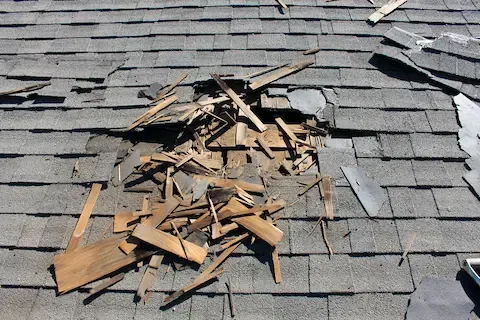
Spotting Tornado Roof Damage in Jonesboro AR Homes
Tornado roof damage in Jonesboro, AR often appears as lifted or missing shingles, bent or displaced flashing, twisted ridge vents, exposed decking, and granule loss concentrated in irregular patterns. Unlike straight-line wind damage, tornado damage frequently shows rotation effects — shingles stripped in multiple directions, gutters peeled away from fascia, and debris punctures across the roof plane. Because tornado pressure changes can lift materials from underneath, some damage is only visible from the roof surface or attic. Jonesboro homeowners should document visible damage immediately after a storm and avoid walking on the roof without professional assessment.
What Does Tornado Roof Damage Look Like From the Ground?
From street level, you can spot several warning signs without climbing a ladder. Look for shingles that are visibly curled, lifted at the edges, or missing entirely. Fascia boards and gutters that are bent, separated, or hanging indicate high wind uplift. Debris — branches, gravel, or foreign materials — embedded in or resting on the roof surface points to tornado-force impact. Chimney caps that are cracked or knocked off, and flashing that appears to be peeling away from roof edges or valleys, are also common after tornado activity in the Jonesboro area. Photograph every visible issue from multiple angles before any cleanup begins.
How Is Tornado Damage Different From Regular Storm Damage?
Standard thunderstorm damage tends to follow a single wind direction — shingles blow off one side of the roof, gutters detach from one elevation. Tornado damage is different because rotating winds stress the roof structure from multiple angles simultaneously. You may find shingles missing on both the windward and leeward sides. Flashing can be pulled upward rather than pushed sideways. Roof decking may show signs of structural racking, where the entire panel has shifted slightly out of alignment. In Northeast Arkansas, tornadoes can also create rapid pressure drops that literally pull roofing materials upward from below, causing damage that has no single directional pattern.
What Interior Signs Indicate Tornado Roof Damage?
Roof damage from a tornado often shows up inside your home before you realize the extent of exterior damage. Check your attic immediately after severe weather passes. Look for daylight visible through the decking, which indicates missing or displaced shingles and underlayment. Fresh water stains, wet insulation, or dripping along rafters all point to active intrusion points. On the ceilings below, bubbling paint, discolored drywall, or sagging sections indicate water has already entered the structure. In Jonesboro homes with vaulted ceilings or minimal attic access, ceiling stains may be the first and only interior indicator you have.
Which Roof Components Are Most Vulnerable in a Tornado?
Certain roof components fail predictably under tornado conditions. Ridge caps — the shingles running along the peak of your roof — are particularly exposed because wind attacks them from both sides simultaneously. Roof vents and turbines can be twisted, cracked, or completely removed, leaving open holes in the roof surface. Pipe boots and flashing around penetrations are often the first seals to fail under uplift pressure. Gutters and drip edge along the eaves face direct wind load and frequently detach. On older Jonesboro homes with original decking, the decking itself may delaminate or crack under the structural stress of tornado-force uplift.
Should You Get a Professional Inspection Even If Damage Looks Minor?
Yes. What appears to be a few missing shingles can represent significantly more hidden damage beneath the surface. Tornado events create rapid pressure fluctuations that can compromise the seal strips on shingles that are still visually in place, break the adhesive bond on flashing, and stress the roof deck without leaving obvious surface evidence. A licensed roofing contractor can walk the roof surface, inspect penetrations, and assess structural integrity in ways that a visual ground inspection cannot replicate. For Jonesboro homeowners, getting a professional assessment documented promptly also supports your insurance claim process. For help understanding how that process works, read the claim filing walkthrough before contacting your insurer.
What Steps Should You Take Immediately After Tornado Roof Damage?
First, confirm it is safe to be outside and near the structure — check for downed power lines, unstable trees, or structural compromise on the home itself. Once it is safe, photograph the exterior from all four sides of the home and capture close-up shots of any visible damage. Do not climb onto the roof. If there are active leaks inside the home, place buckets and use towels to limit interior damage. Contact a licensed contractor to arrange emergency tarping or temporary protection if large sections of roofing are missing or open to the sky. Storm Damage Roof Repair services can often respond quickly after severe weather events in the Jonesboro area to prevent secondary water damage from compounding the original storm loss.
How Do You Document Tornado Roof Damage for an Insurance Claim?
Documentation quality directly affects claim outcomes. Use your smartphone to photograph all visible damage from the ground, capturing the full roof plane as well as close-up details of lifted shingles, displaced flashing, and damaged gutters. Record a video walkthrough of the entire exterior and note the date and time on your footage. Inside, photograph any ceiling stains, attic damage, or interior water intrusion. Write down a damage description while the details are fresh. Save any contractor inspection reports, especially if they include photographs taken from the roof surface. Adjusters in Northeast Arkansas rely heavily on documented evidence when processing tornado-related claims, and gaps in documentation can slow approvals or reduce settlement amounts.
